Size for a Marathon Inflatable Arch

Picking the size of a marathon inflatable arch isn’t just about making a statement. It needs to fit the event space, be visible enough for runners and spectators, and be manageable for setup and takedown. For big city marathons, a towering arch that clears both the width of the street and overhead obstacles like traffic lights is often necessary. Smaller community races might benefit from something more modest, around 12 to 15 feet wide, which is easier to transport and handle.
Keep in mind the trade-offs: larger arches require more power to keep inflated and a more substantial frame, which means increased logistics and potentially higher costs for accessories like ground stakes or weighted bases. Storage space is another consideration—if your arch is oversized, it might not fit in your transport vehicle without disassembly, adding time to your setup.
If your event is in a windy location, size can impact stability, too. Larger arches present a bigger surface area to the wind, making securing them critical. In those cases, choosing an arch size that balances visibility with safety is essential for a smooth event day.
Material Choices Affect Durability and Handling
The material of your marathon inflatable arch influences how long it lasts, how easy it is to clean, and how it performs in various weather conditions. PVC-coated nylon is a common choice because it’s durable and relatively lightweight. But it can be prone to scuffing and stains, which might be a problem if the arch is reused frequently.
For events expecting harsh weather or repeated use, thicker vinyl or reinforced fabrics offer greater resistance to tears and wear. This makes them a bit heavier to handle but potentially more cost-effective over time. Some suppliers offer UV-treated materials too, which helps colors stay vibrant through sunny days.
If you’re dealing with muddy or uneven ground, the material’s abrasion resistance can be a big factor. A rugged bottom material prevents holes and punctures that might happen from sharp objects or rough terrain. When selecting a marathon inflatable arch, balancing material quality with event needs and budget will save you headaches down the road.
Customization and Branding Versus Cost and Setup Time
A marathon inflatable arch is one of the first things participants and spectators see, making it prime real estate for branding. Printed logos, sponsor names, and race info can all elevate the professional appearance of an event. However, customization adds complexity.
Custom printing increases lead time and costs, so planning well in advance is a must. Also consider that highly detailed graphics might require special care during setup to avoid creases or color inconsistencies. Banners and removable panels are alternatives that provide branding flexibility, with easier replacement for future races.
Keep setup time in mind, too. A basic arch with minimal decoration might take just 15 minutes to get upright, while a heavily branded version could require additional hands and more time for alignment and attachment of graphics. Weigh the visibility impact against these practical constraints, particularly if you run multiple events in a tight timeframe.
Inflation Method and Logistics on Race Day
A marathon inflatable arch will generally use either electric blowers or manual pumps for inflation, and each option has trade-offs. Electric blowers keep the arch inflated continuously during the event but tether you to a power source. They’re quick and reliable but require access to generators or outlets, which isn’t always straightforward in remote start or finish locations.
Manual pumps or battery-operated options offer more mobility but take longer to inflate and may not maintain pressure as well. This can be a concern for longer races or events where the arch must stay up for hours. It can also affect how many staff members you need during setup.
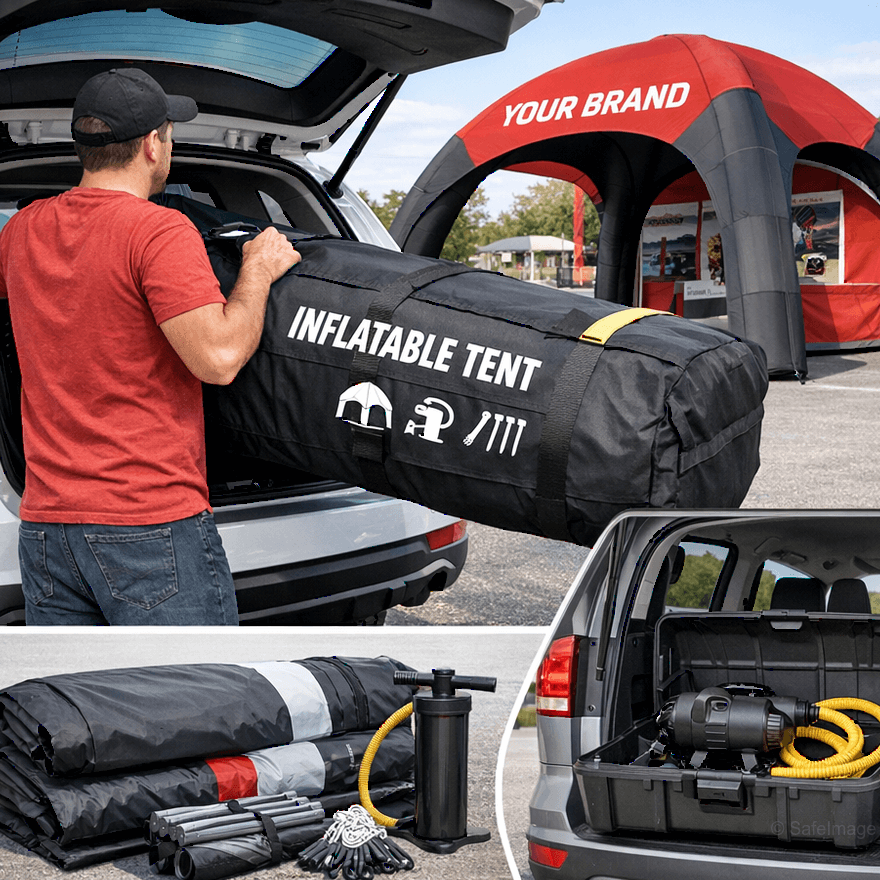
Transportation logistics come into play here. Inflatable arches need to be packed in a way that avoids damage, and power cords or pumps should be checked and kept in good working order. Backup options or onsite troubleshooting plans help avoid last-minute headaches, especially when dealing with unpredictable weather or tough site conditions.
| No. | Product Model |
|---|---|
| 7898 | car camping tent |
Site Restrictions That Influence Arch Selection
Event venues sometimes have rules or physical constraints that limit the type of marathon inflatable arch you can bring. Parks and historic districts may have restrictions on ground stakes, forcing the use of weighted bases that add to setup weight. Overhead cables or nearby structures can also affect arch width and height.
Some sites prohibit electric generators or loud equipment, so you might need quieter battery-inflated arches. It’s important to connect with venue managers early on to understand all site-specific guidelines. Otherwise, what looks perfect on paper might become a logistical nightmare on race day.
Terrain matters, too: asphalt, grass, or gravel all require different anchoring methods, and some inflatables aren’t ideal for uneven surfaces. Mapping out where the arch will stand—as well as access routes—makes a big difference in selecting the right model.
Impact of Weather and Environmental Factors
Weather plays a silent but critical role in whether your marathon inflatable arch works as planned. Wind, rain, and temperature swings can all cause issues. Strong gusts might require additional tie-down points or even choosing a sturdier arch frame.
Rain can weight down fabric and increase risk of water pooling, which some designs handle better than others. Materials with quick-dry coatings help reduce downtime between events or stages. Cold weather can affect the elasticity of inflatable repair patches, so inspecting equipment before the season starts is key.
Lastly, consider extreme sun exposure in some climates. Fading due to UV shouldn’t be overlooked if you’re investing in high-end branding on your marathon inflatable arch. Planning for storage, quick cleaning, and occasional repairs ensures your inflatable stays race-ready for years.