
Inflatable Pop Up Tent for Different Event Sizes
One of the biggest challenges for event planners and distributors is selecting an inflatable pop up tent that matches the scale and needs of their events. A tent too small might leave guests cramped and uncomfortable, while an overly large one might be cumbersome to transport and set up. Understanding the typical attendee count and purpose of the event can guide the tent size decision.
For small promotional booths or product demos, a compact inflatable pop up tent designed for quick assembly and portability suits best. Medium-sized tents often feature modular designs, allowing adjustments in size or internal configurations to accommodate mid-sized crowds, usually scalable between 20 and 60 people. Larger tents cater to festivals or corporate events where branding area and weather protection must extend over more extensive setups.
Each size option comes with its trade-offs. Larger tents require more robust inflation equipment and may take longer to assemble, presenting logistical challenges in transportation. Smaller tents offer speed and convenience but could lack the durable features needed in extreme weather. Knowing the event’s environment and priorities influences the choice more than merely square footage.
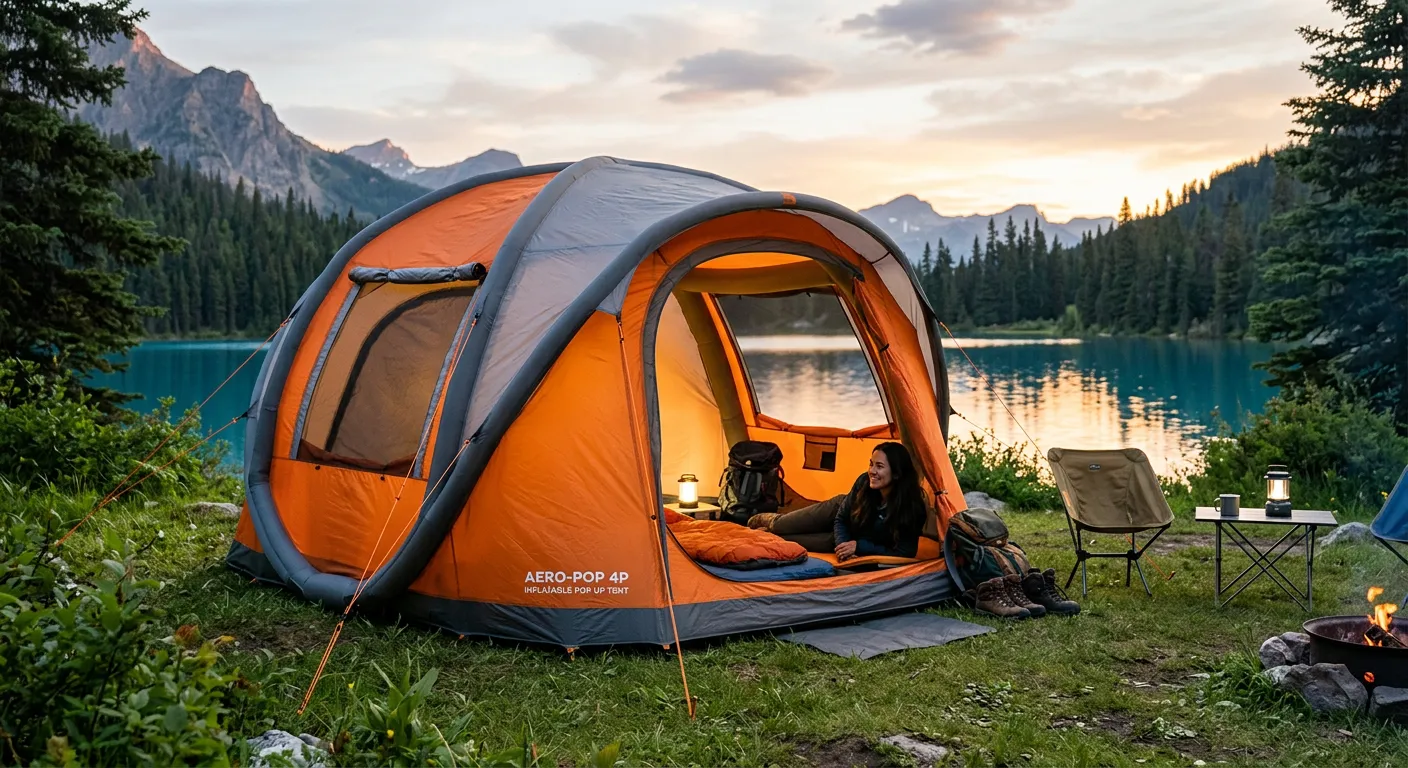
Handling Setup and Breakdown: Time, Equipment, and Skill Level
The touted convenience of an inflatable pop up tent hinges on how straightforward it is to set up and dismantle. This factor often dictates whether the tent can be effectively deployed by in-house teams or requires professional assistance. For recurring events needing quick turnarounds, tents that deploy in under 10 minutes bring significant efficiency gains.
Inflatable tents typically come with an electric or battery-operated pump, but the power source and pump type influence operational ease. Battery pumps offer portability but need proper maintenance and charging before deployment. Electric pumps ensure constant performance but depend on nearby power access, which may be limited at outdoor venues.
Skill level cannot be underestimated. Some tents are “plug-and-play,” almost self-explanatory in their setup, while others have more involved anchoring or configuration needs, especially if customized printing or additional features are involved. Training staff beforehand can prevent delays and damage to the tent fabric or structure.
Material Durability and Weather Considerations During Outdoor Use
While the inflatable pop up tent provides a visually appealing and quick-to-erect shelter, it is essential to recognize material and weather limitations before committing to long-term outdoor use. Most tents use polyester or PVC-coated fabrics, which balance weight and water resistance but vary widely in durability.
Wind resistance is a critical consideration. Inflatable tents typically rely on air pressure maintained by continuous airflow. Sudden gusts or rough weather can risk destabilizing the structure unless proper anchoring is applied. Some models include ground stakes, sandbags, or weighted frames, but all require site-specific assessment.
UV exposure can degrade fabric color and strength over time, leading to brittleness or fading of printed logos. This factor matters most for distributors who will be storing tents outdoors or using them repeatedly in sunny locations. Regular maintenance, including cleaning and protective covers, can extend operational life, but users should set realistic expectations about the lifespan of the material.
Branding and Customization: Balancing Visibility and Practicality
The inflatable pop up tent’s greatest marketing asset is its surface area that can be customized with logos, brand colors, or promotional messages. Choosing a tent for distribution or event use often comes down to how well it supports brand visibility without compromising functionality.
One practical issue is the balance between vibrant, full-coverage printing and the impact on ventilation or fabric flexibility. High-coverage prints can stiffen the material, making folding or packing more challenging. It also sometimes affects breathability, which can lead to condensation buildup inside the tent in humid conditions.
Another consideration is ease of updating designs for future campaigns. Custom tent fabric can be an investment, so selecting models that allow for interchangeable or modular branding panels offers flexibility. Some tents support removable banners or vinyl stickers that can be swapped quickly but may not have the same durability or visual impact as direct printing.
Buyers and event organizers should also consider the appearance of seams and inflation tubes as part of the visual profile. While these support structures are necessary, overly visible components may break the clean look of branding, so tent designs that cleverly conceal or incorporate these elements often produce a more professional finish.
Storage and Transport: Design Features That Affect Logistics
Repeatedly transporting inflatable pop up tents between event sites or to customers requires attention to storage and portability features. Where event planners or distributors rely on compact packing and ease of movement, weight, packing volume, and protective casing become practical concerns.
Tents with integrated carrying bags or custom-fit cases reduce the risk of damage during transit and simplify inventory handling. Additionally, the fabric’s ability to compress without damage affects how tightly the tent can be rolled and stored. Some materials may become creased or weakened if folded improperly, leading to micro-tears or air leaks over time.
Models with fewer external protrusions also ease loading into vehicles or shipping crates. Inflatable tents that have design elements to minimize snagging—like smooth edges or minimal external hardware—help maintain their condition, essential for distributors handling multiple units.
Consider also the multi-user scenario. If tents cycle through various locations or rental situations, easy-to-clean fabrics and quick inspection of damage become practical priorities. Durability in transit complements on-site durability, maintaining value over a tent’s lifecycle.
Inflation Technology and Maintenance: What Keeps the Tent Performing
An inflatable pop up tent relies entirely on a consistent, leak-free air supply to maintain its shape. Choosing the right pump technology and establishing a maintenance routine forms the backbone of trouble-free operation.
Electric blowers that run continuously during an event ensure the tent stays rigid, but noise levels can be a concern, especially at quieter gatherings or indoors. Battery options reduce noise but pose power limitations. In many cases, redundancy through a backup pump or manual inflation options provide peace of mind.
Maintenance tasks go beyond the pump: regularly checking seals, zippers, and fabric integrity extends the structure’s lifespan. Small punctures or seam failures may be repairable with patches, but timely detection is essential to prevent a progressive problem. Professional buyers and distributors often negotiate service terms or training with suppliers to empower their staff.
Inflation speed influences setup time and overall workflow. Slower pumps might be quieter but complicate quick team deployment. Fast inflators come at a higher cost but streamline event operations, a trade-off that depends on volume and frequency of use.
Making informed choices about an inflatable pop up tent involves balancing practicality with appearance, durability with portability, and flexibility with ease of use. These factors intertwine differently in every event scenario, so thorough consideration and hands-on experience often guide the best fit.