Choosing Inflatable Furniture for Different Event Types
Event spaces vary wildly—from cramped convention center corners to expansive outdoor activations—so selecting the right inflatable furniture involves some trade-offs. Larger inflatables create strong visual impact and can comfortably accommodate several people, perfect for creating dedicated lounge zones within busy exhibitions. But keep in mind that oversized inflatables demand more logistics: inflated volume, transportation bulk, and setup time.
Compact inflatable chairs or ottomans take up less space, making them suitable for densely packed brand activations where efficient use of floor area is a priority. They’re lighter to move and require less time to inflate and deflate, allowing event teams to adjust layouts quickly. However, the smaller size may compromise seating comfort over longer sessions, so pairing inflatables with other seating options can improve guest experience.
For outdoor events, material choice becomes crucial. UV-resistant and waterproof coatings are necessary to prevent rapid wear and maintain firmness throughout the event day. If the event spans multiple days, inflatable furniture that can be topped up with air easily shows its practicality—constant reinflation is a common issue for cheaper models.
Balancing Aesthetics and Durability
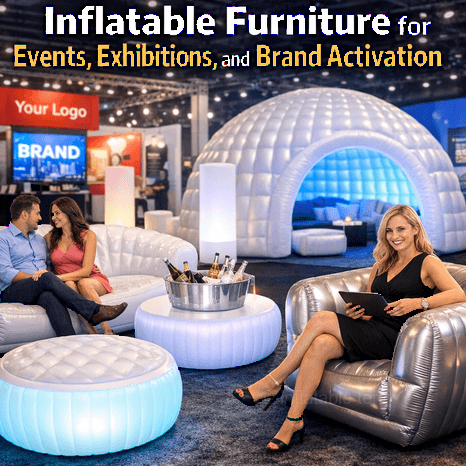
Inflatable furniture stands out thanks to its often playful, contemporary look, which brands find appealing for setting a casual yet memorable tone. Transparent or vividly colored inflatables can reinforce brand identities and create Instagram-worthy spaces that encourage social sharing. But aesthetics can sometimes compete with robustness, especially in high-traffic areas.
Premium-grade PVC or reinforced nylon inflatables withstand repeated use better but at a higher upfront cost. Thinner materials save weight, making shipments cheaper and handling quicker, but they tend to puncture or sag under heavy use. Consider the event duration and expected footfall to judge how durable your inflatable furniture needs to be: disposable or short-term activations can get away with budget-friendly options, but ongoing rentals or multi-event deployments generally justify investing in mid to high-tier units.
Manufacturers’ warranties and repair services also impact long-term value. Some suppliers provide patch kits and offer on-site repairs if needed, which can save significant hassle during multi-day shows where damaged furniture means immediate replacement or safety concerns.
Inflatable Furniture Setup and Operational Considerations
Setting up inflatable furniture isn’t just a matter of inflating and arranging. You’ll need space to unpack the deflated items, a reliable power source for electric pumps, and a solid plan to manage air pressure throughout the event, especially if customers repeatedly sit and stand.
Many event planners overlook the subtle challenge of maintaining firmness—temperature fluctuations, especially outdoors, can cause materials to expand or contract, leaving inflatables less stable mid-event. This can affect comfort and safety, so scheduling a short reinflation break or choosing furniture with built-in pressure valves can address these issues.
Noise is another factor. Electric pumps aren’t silent, so inflating in a quiet environment or immediately before guests arrive reduces disruption. Battery-operated portable pumps offer flexibility but often take longer to semi-inflate bulky pieces. If your team lacks experience, then practicing setup and pack-up routines ahead of the event avoids on-site delays and damage.
Handling inflatables post-event requires care to extend lifespan. Sharp folds, damp storage environments, or improper cleaning can cause premature wear. Encourage event staff to roll or loosely fold furniture and dry thoroughly if used outdoors. Storage bags designed to protect the inflatable from sunlight and dust make a difference in repeated use scenarios.
Customization Options for Brand Activations
Inflatable furniture is popular with brands seeking customized, eye-catching setups. Custom colors, printed logos, or unique shapes allow event spaces to align closely with brand guidelines and thematic messaging. But customization introduces additional lead time and sometimes increases the minimum order quantity, which distributors must communicate clearly to clients.
Printing methods vary; some use heat transfer vinyl applied post-inflation while others embed logos directly into the inflatable’s material during manufacturing. The latter tends to be more durable and weather-resistant but limits last-minute changes. If your client frequently updates branding or seasonal messaging, modular inflatable furniture with attachable graphics or removable covers might offer more flexibility.
Special shapes—like inflatable sofas shaped as product replicas or interactive structures—grab attention but can increase costs and complexity for setup. Trade-offs include longer manufacture times and higher shipping fees due to odd dimensions. Work closely with suppliers to understand structural integrity and safety testing for these custom pieces.
Cost Considerations and Lifecycle Expectations
At a glance, inflatable furniture appears budget-friendly compared to traditional setups because of lower material and storage costs. But the full expense reveals itself over time through potential repairs, air leakage, and replacement cycles. Knowing the expected lifecycle for your inflatable furniture helps set realistic budgets and scheduling for refreshes.
Rental companies often see high turnover rates for inflatables due to wear and public mistreatment, so they factor replacement costs into rental pricing. If you supply multiple events or work with clients investing heavily in event branding, offering durable inflatables with warranty agreements attracts repeat business.
Keep in mind shipping. Inflatable furniture generally saves freight space compared to bulky hard furnishings, but some models require delicate handling, influencing packaging and carriage fees. Volume discounts may apply if ordering sets tailored to ongoing client needs, which becomes a strong value proposition.
Ultimately, combining practical durability with brand-centric design requires thoughtful negotiation with suppliers. Understanding which inflatables simply “look good” versus those proven reliable from past events saves headaches and supports smoother client experiences.
Managing Safety and Accessibility
Inflatable furniture must meet safety standards since many events have crowd density and accessibility regulations. Ensuring pieces are stable and have non-slip bases is essential to prevent accidents, especially in areas with high footfall or active children.
Consider also furniture height and ease of use for people with mobility challenges. Low-seated inflatable stools may be stylish but harder to use for some attendees. Offering a mix of inflatable and traditional seating can create inclusive spaces without compromising the visual impact.
Some inflatables come with reinforced seams and secure anchoring systems adaptable for outdoor use to withstand wind or uneven surfaces. Confirm these specifications before committing to an order, particularly for large installations.
Periodic inspections during events help identify any deflation or damage early, preventing safety risks. Training event staff on quick repairs and safe handling benefits everyone involved.
—
Choosing the right inflatable furniture for events is more about balancing practical usage against client expectations than simply picking the flashiest item. Understanding the nuances of material quality, setup demands, customization possibilities, and safety requirements lets you guide buyers towards solutions that deliver consistent value across multiple activations.