Choosing Between Inflatable Event Tents and Traditional Tents for Marketing Events
When planning a marketing event outdoors, one of the biggest decisions revolves around shelter. The tent you pick can impact everything from branding visibility to setup time. Inflatable event tents and traditional tents each have their own quirks, and weighing these against your event’s specific needs makes all the difference.
Inflatable event tents have grown in popularity among event planners who value quick assembly and portability. Unlike traditional tents, which often require poles, stakes, and crew coordination, inflatables use air pressure to hold their shape. This method drastically cuts down setup times, sometimes to just 10–15 minutes, depending on size and complexity. For a marketing activation with a limited window or tight logistical constraints, that speed can be a game changer. It also means fewer hands on deck, which trims labor costs.
On the flip side, traditional tents still hold the crown for sturdiness and customization on a large scale. If you’re staging a multi-day event with unpredictable weather, a properly anchored frame tent will likely handle wind and rain better. They can also cover very large areas with fewer gaps and seams, which might be an advantage for walk-in exhibits or hospitality lounges. Inflatable event tents tend to be more compact, so they fit best when branding impact and mobility factor higher than expansive shelter.
Branding and Visual Impact: What Works Best?
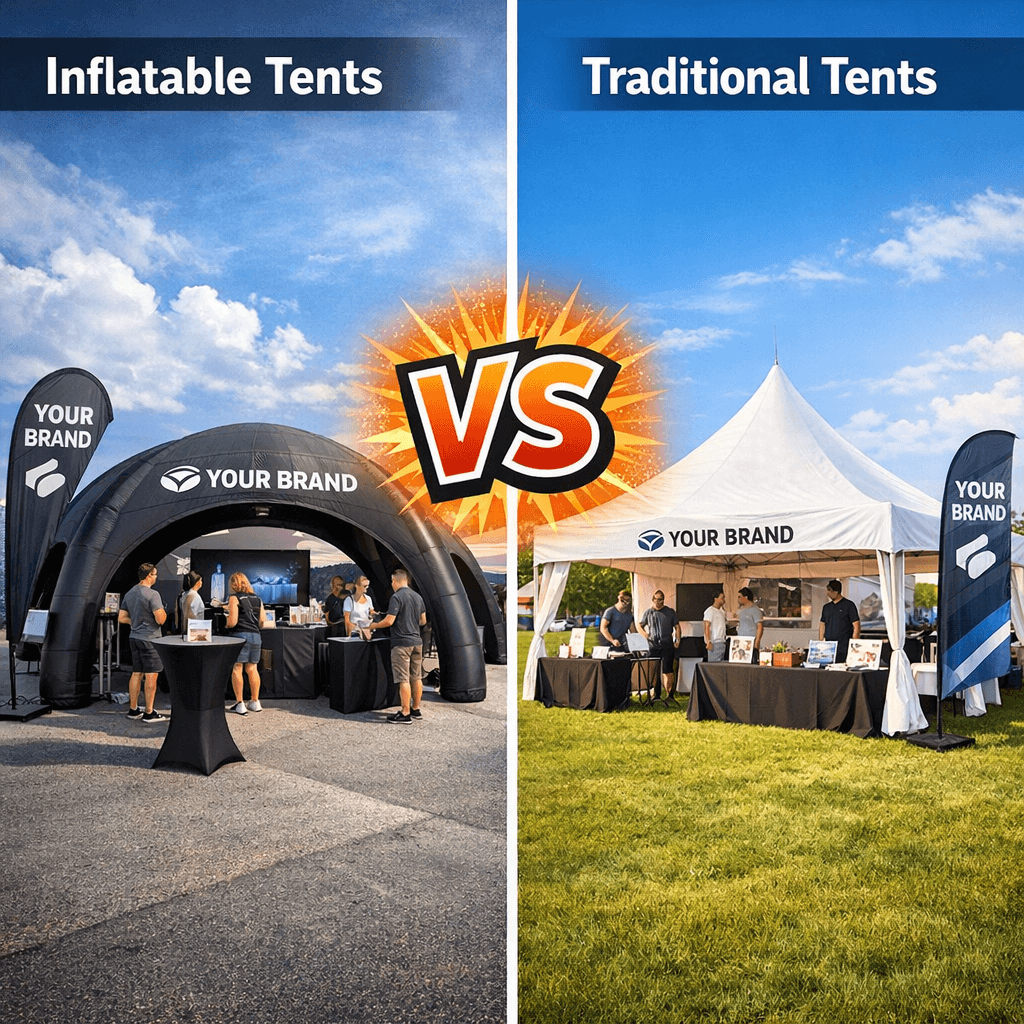
Marketing events thrive on visibility. Your tent is more than shelter; it’s a walking billboard. Inflatable event tents offer exciting opportunities because their shapes can mimic logos, icons, or unique designs. This three-dimensional branding stands out, particularly in busy festival grounds or trade show courtyards. The smooth surface creates a clean canvas for vibrant prints that won’t wrinkle or sag like fabric can on poles.
Traditional tents come with their own brand options, but the shapes are generally boxed or peaked. Customizing with banners, awnings, or printed walls adds branding, but these attachments often require extra time and can be affected by wind or sagging. Inflatable event tents, meanwhile, maintain their shape under inflation pressure, keeping logos and messaging crisp for the entire event. This advantage makes them appealing for one-off launches or pop-ups where instant wow factor matters.
That said, if you need large surface area branding on walls or want to mix indoor/outdoor spaces seamlessly, rigid framed tents offer more flexibility. Inflatable tents are less modular by design, so matching multiple units or attaching rooms can feel tricky. It’s about choosing the right visual approach: Compact, bold, and sculptural with inflatables, or spacious, structured, and adaptable with traditional options.
| Number | Product Model |
|---|---|
| 9581 | inflatable tent |
Durability, Safety, and Weather Considerations
Durability is critical when investing in tents that will see repeated use or face demanding conditions. Inflatable event tents rely on high-quality materials like reinforced PVC or TPU-coated fabric to stay airtight and resist punctures. While these materials hold up well for many outdoor events, sharp objects, or rough terrain can cause slow leaks or tears if the tent isn’t handled carefully.
In contrast, traditional tents made from heavy-duty polyester and sturdy metal frames usually stand up better under harsh weather. They resist wind gusts better once anchored properly and don’t deflate unexpectedly. Some planners worry about the potential for a sudden leak in an inflatable tent disrupting an event, but the models designed for the event industry often feature multiple air chambers and pressure monitors that minimize this risk.
Safety and compliance can also play a role. Certain venues have strict rules about the types of materials and setups allowed. Traditional tents often meet these standards easily because their use is widespread and well-documented. Inflatable event tents may require extra certification or inspection, especially if they’re large or custom-made. Checking local regulations and venue policies in advance can save headaches on site.
Storage and Transportation Demands
For distributors or event rental companies juggling multiple gigs, storage and transportation are ongoing headaches. Inflatable event tents offer a major advantage here. When deflated, they fold down into compact bundles that are easy to pack into standard cases or bags. This means lower freight costs and less bulk when moving gear between events.
Traditional tents come with poles, stakes, and fabric panels that can be bulky and heavy. Transporting a large frame tent often means a truckbox or sizeable trailer, sometimes with multiple cubic meters taken up by the frame alone. Storage is similarly space-consuming—multiple poles and crossbars need designated rack space or carefully organized storage rooms. This logistical footprint translates into higher overhead for many rental businesses.
On the other hand, quick setup with inflatables can sometimes mean requiring inflators or backups on site, adding to the equipment list you carry. Also, inflatables can require more delicate handling during packing to avoid future leaks or material fatigue. Durability and care during transport must be balanced with their portability perks.
Cost Factors to Balance: Short-Term vs Long-Term Use
Cost is always a big piece of the puzzle. Inflatable event tents tend to have a higher upfront price per square meter compared to traditional tents. Custom shapes and printing add to that cost. However, the labor savings on setup and takedown, along with savings on transportation, can offset this over multiple events.
For planners running many short, pop-up activations, the ability to deploy quickly without a big crew can reduce total event expenses dramatically. In contrast, larger traditional tents may require teams and longer setup windows, increasing labor and operational costs even if the rental or purchase price seems lower per unit.
Long-term durability also influences costs. Traditional tents meant for heavy-duty or multi-year use often come with easier options for replacing worn parts and refinishing surfaces. Inflatable event tents might require more frequent repairs or replacement after many rental cycles—especially if they become damaged or have persistent leaks.
Ultimately, a return on investment discussion makes sense here. Many rental companies find value in mixing both tent types in their inventory, reserving inflatables for high-impact, fast-arrival events and traditional tents for longer or larger scale set ups.
Environmental and Sustainability Considerations
Eco-conscious planning is becoming more mainstream in the events industry. Traditional tents built from polyester can generally be reused for many years, but cleaning and repairs have environmental impacts. Inflatable event tents are often made from PVC-based materials, which raises questions about recyclability and disposal.
On the upside, the lighter weight and compact packing of inflatable event tents can lower carbon emissions related to transportation. Carrying more equipment per trip reduces fuel consumption. However, replacements or early wear that leads to shorter lifespans could erode these benefits.
Reusable and repairable traditional tents allow for extending product life through refurbishment, an important factor for companies committed to sustainability. Some inflatable models are now made with more eco-friendly coatings and include repair kits to prolong their usability.
Clients increasingly want transparency on the life cycle of event equipment. Being prepared to discuss the environmental footprint of each tent type helps planners align choices with their brand values and sustainability goals.
—
Deciding between an inflatable event tent and a traditional tent ultimately depends on your event’s priorities around speed, branding impact, durability, logistics, and budget. While inflatables transform deployment and offer unique visual appeal, traditional tents hold strong for rugged versatility and scalable coverage. Understanding the trade-offs for your specific scenario lets you make a practical choice that keeps your event running smoothly.