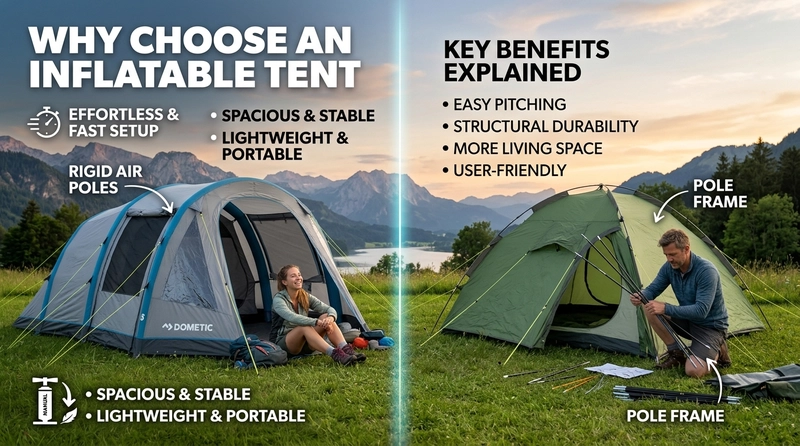
Outdoor enthusiasts and decision-makers often face challenges when it comes to how to set up an inflatable tent for outdoors. The process can seem complex, time-consuming, and sometimes unsuitable for varying environments, negatively impacting the overall camping experience. This guide not only walks you through the standard setup steps but also offers tailored advice for rainy weather, mountainous areas, and coastal conditions. With these tips, you can ensure efficient setup, prolong your tent’s lifespan, and make well-informed purchasing choices.
Understanding the Basics: What Is an Inflatable Tent and How Does It Work?
Inflatable tents differ significantly from traditional pole-based tents. Instead of rigid poles, they use air-filled beams (airbeams) to maintain structure and stability. These beams are inflated using pumps, creating a framework that supports the fabric walls and roof. This design reduces setup time dramatically and often makes the tent lighter and more compact when packed.
Advantages over traditional tents include:
- Faster setup: Inflatable beams can be inflated within minutes, eliminating the need for pole assembly.
- Enhanced flexibility: Air beams flex under pressure, improving wind resistance.
- Ease of transport: Inflatable tents typically weigh less due to the absence of metal or fiberglass poles.
Market Trends and Types in 2026
According to recent industry reports, inflatable tents are gaining traction among outdoor professionals and casual campers alike. Key types include:
- Single-chamber inflatable tents: Simple and lightweight, ideal for solo or duo campers.
- Multi-chamber tents: Provide added stability and redundancy; if one chamber deflates, others maintain structure.
- Hybrid models: Combine inflatable beams with traditional poles for enhanced durability.
Brands like KCCE have innovated by incorporating TPU-coated fabrics and advanced air-sealing valves, boosting durability and ease of use.
Step-by-Step Guide: How to Set Up an Inflatable Tent for Outdoors
Tools and Materials Preparation
Before heading outdoors, ensure you have:
- A compatible electric or manual air pump: Portable electric pumps with adjustable nozzles are highly recommended for speed and convenience.
- Groundsheet: To protect the tent floor and improve insulation.
- Tent stakes or sandbags: Necessary for securing your tent against wind.
- Repair kit: For emergency fixes.
Setup Process
- Select a flat, debris-free site: Clear rocks, sticks, and sharp objects.
- Lay out the tent flat with the base down: Position the door facing your preferred direction.
- Attach the pump nozzle to the air valve: Use the recommended pressure setting (usually printed near the valve).
- Inflate the tent: For single-person setup, start with the main beams, ensuring even inflation to avoid fabric stress. Multi-person setups can divide tasks, inflating multiple chambers simultaneously.
- Secure the tent: Use stakes in solid soil or sandbags in loose terrain. Ensure guy lines are taut but not overly tight.
- Final adjustments: Check seams, zippers, and ventilation flaps.
Common Errors and Solutions
- Overinflation: Can cause seams to burst; always monitor pressure.
- Uneven inflation: Leads to structural instability; inflate gradually and check each beam.
- Insufficient anchoring: Results in tent movement during wind; reinforce with extra stakes or weights.
Recommended Tools
- Portable electric pump: KCCE’s latest model offers 12V compatibility and automatic shutoff.
- Heavy-duty tent stakes: Ideal for rocky or hard ground.
- Sandbags: Lightweight and reusable for beach or desert setups.
Adapting Your Setup to Different Outdoor Environments
Rainy Weather Setup Tips
- Choose a site with natural drainage: Avoid depressions where water pools.
- Use a waterproof footprint or tarp underneath: Adds a second layer against moisture.
- Seal all seams with waterproof tape: Even if factory-sealed, extra protection helps during heavy rain.
- Keep ventilation flaps partially open: Prevents condensation buildup inside the tent.
Mountainous High-Wind Environments
- Deploy all guy lines: Use additional ropes and secure them to stable anchor points like rocks or trees.
- Inflate with slightly higher pressure: Air beams become more rigid, improving wind resistance.
- Position the tent with the narrowest side facing the wind: Minimizes surface area exposed to gusts.
Coastal Conditions: Salt Spray and Strong Winds
- Rinse tent fabric with fresh water after use: Salt can degrade materials over time.
- Use corrosion-resistant stakes and clips: Prevent rusting from salt exposure.
- Increase anchoring weight: Sandbags and heavier stakes are essential to combat strong gusts.
Real-World Example
A KCCE user camping in the Scottish Highlands reported successfully weathering 60 mph winds by fully inflating all chambers, doubling their guy lines, and using durable sandbags. Their inflatable tent maintained integrity, showcasing the adaptability of these tents when setup correctly.
Durability and Performance: Materials, Wind Resistance, and Weatherproofing
Material Analysis
- PVC-coated fabrics: Offer excellent waterproofing but can be heavier and less breathable.
- TPU (Thermoplastic Polyurethane): Increasingly popular in 2026 for its flexibility, UV resistance, and lower environmental impact.
KCCE’s latest models use TPU coatings combined with ripstop nylon, balancing durability and weight.
Wind Resistance Testing
Inflatable tents undergo wind tunnel testing to simulate gusts up to 90 km/h. Results show:
- Air beam flexibility absorbs wind shocks better than rigid poles.
- Multi-chamber designs distribute pressure evenly, reducing failure points.
- Sealed air valves prevent sudden deflation.
Notable 2026 Models
| Brand | Model | Material | Max Wind Resistance | Weight | Price |
|---|---|---|---|---|---|
| KCCE | AirShield Pro | TPU + Ripstop | 90 km/h | 4.3 kg | $450 |
| TentCo | InflataMax 4P | PVC | 80 km/h | 5.0 kg | $390 |
| AeroTents | FlexiAir 3P | TPU | 85 km/h | 3.8 kg | $420 |
Maintenance, Troubleshooting, and Storage Tips for Inflatable Tents
Daily Maintenance
- Inspect for leaks: Use soapy water to locate bubbles indicating punctures.
- Avoid overexposure to UV: Store tents in shade when not in use.
- Dry thoroughly: Prevent mold and material degradation.
Troubleshooting Common Issues
- Slow deflation: Check valves for dirt or damage.
- Leak repair: Use a patch kit with adhesive suitable for TPU or PVC.
- Zipper jams: Apply silicone lubricant or clean debris.
Storage Guidelines
- Clean before storage: Remove dirt and moisture.
- Deflate completely: Prevent stress on seams.
- Fold loosely: Avoid sharp creases that weaken fabric.
- Store in a cool, dry place: Away from direct sunlight.
Recommended Products
- Repair kit: Includes patches, adhesive, valve replacements.
- Tent cleaner: Mild detergent formulated for synthetic fabrics.
Buying Guide: How to Choose the Best Inflatable Tent for Your Outdoor Needs
Assess Your Needs
- Occupancy: Single, couple, or family-sized tents.
- Frequency of use: Occasional weekend trips vs. extended expeditions.
- Environment: Do you camp mainly in rainy, windy, or coastal areas?
Key Comparison Points
- Price vs. quality: Higher price often correlates with better materials and durability.
- Brand reputation: KCCE and AeroTents are known for robust designs and good customer service.
- User reviews: Look for feedback on setup ease, durability, and after-sales support.
Recommended 2026 Models Comparison
| Feature | KCCE AirShield Pro | TentCo InflataMax | AeroTents FlexiAir |
|---|---|---|---|
| Setup time | ~8 minutes | ~10 minutes | ~7 minutes |
| Wind resistance | 90 km/h | 80 km/h | 85 km/h |
| Weight | 4.3 kg | 5.0 kg | 3.8 kg |
| Price | $450 | $390 | $420 |
| Warranty | 3 years | 2 years | 3 years |
Purchase Channels and After-Sales Advice
- Buy directly from official brand websites or authorized dealers.
- Verify warranty terms and return policies.
- Consider extended warranty or service packages for frequent users.
Quickly mastering how to set up an inflatable tent for outdoors is key to maximizing your outdoor adventure. By selecting the right tools, adapting to your environmental conditions, and maintaining your tent properly, you ensure durability and comfort. Explore the recommended models and start planning your next trip with confidence—your perfect inflatable tent awaits!