Choosing the Right Size for Your Custom Inflatable Display
Picking the proper size for a custom inflatable display often hinges on the event environment and the goal of the display. Smaller models can be great for trade shows or indoor events where space is limited, providing a striking visual element without overwhelming the area. However, going too compact risks losing impact, especially in busy venues. Larger inflatables grab attention from afar but require more planning—think about transport logistics, setup time, and venue height restrictions.
For outdoor festivals or large convention halls, a bigger display helps to stand out among numerous competitors. Still, the bigger the inflatable, the more power it generally consumes for inflation and lighting, and the more secure the anchoring system must be. It’s not uncommon to trade off between maximum size and ease of deployment, so clarify the priorities upfront with your client or internal team.
Sometimes you might face venues with strict size limitations or unusual layouts. Collaborating with a venue manager before finalizing dimensions can prevent last-minute surprises during event setup.
Design Considerations: Balancing Brand Identity and Practicality
Creating a custom inflatable display that reflects the brand while meeting practical needs isn’t just about putting a logo on the surface. The shape, colors, and overall design must be carefully coordinated for visibility and durability. Complex shapes grab attention but may increase production costs and require special handling during transportation.
When designing for custom inflatable displays, consider how easy it will be to assemble and dismantle on-site. Inflatable frames that fold compactly save space for transportation but can come at the expense of more fragile construction. Meanwhile, simpler geometric shapes tend to be more robust and faster to manage during events.
Another point often overlooked relates to the surface material and finishing. Matte fabrics minimize glare under stage or daylight conditions, improving visibility of printed graphics. On the other hand, glossy finishes can enhance color vibrancy but may create reflections that obscure the message.
Sometimes brands want to incorporate interactive elements or areas where visitors can touch and feel textures, but keep in mind that inflatables aren’t designed for heavy physical interaction and need protection from sharp objects.
Lighting Options: Amplifying Visibility Without Overcomplicating
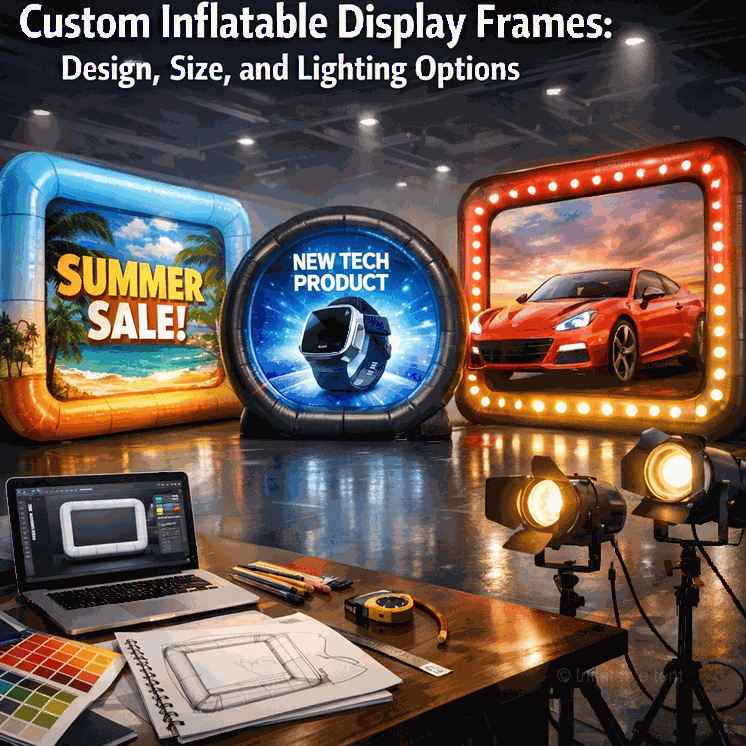
Lighting can transform a custom inflatable display from good to outstanding, especially for evening events or indoor settings with dim lighting. LED integrations inside the inflatable add a glowing effect that immediately pulls attention. These are excellent for backlighting logos or specific design features.
However, internal lighting setups must be balanced with power availability onsite. While battery-powered LEDs offer portability, their brightness and runtime tend to be restricted. Plug-in options bring consistent illumination but may limit placement depending on power outlet locations.
External lighting can also be effective and more flexible. Spotlights or floodlights positioned around the inflatable provide controlled light angles and can be adjusted during the event. Keep in mind though that external setups increase the assembly time and require careful planning to avoid shadows that obscure graphics.
Another trade-off involves weather resistance. Internal LED lighting integrated during manufacturing is usually weatherproof, so outdoor events won’t be interrupted by rain or wind. External lamps might need additional shelter or weatherproof features to ensure consistent performance.
Managing Transport and Setup: Practical Limits of Custom Inflatable Displays
The convenience of inflatables often gets overlooked in favor of their visual appeal. Yet, how you transport and set them up can be a deciding factor for event planners or distributors.
Custom inflatable displays are generally lighter and more compact than rigid signage, but size and shape heavily influence packing volume. Large inflatables need more robust carrying cases to prevent damage during transit. Additionally, in some cases, specialized vehicles might be required to accommodate bulky shapes.
Setup time is another consideration. While inflatables can be inflated quickly using electric blowers, securing them properly with tethers, stakes, or weights takes additional time. Venues with hard flooring often require sandbags or weighted bases instead of stakes, which affects labor and equipment needs.
If the inflatable frame comes with integrated lighting or electronic components, testing these before arriving onsite is essential. Troubleshooting power issues during event setup can cause costly delays.
Involving logistics and operations teams early in the planning stage helps balance creative ambitions with practical realities.
Customization Limits: What Can and Can’t Be Done With Inflatable Displays
A custom inflatable display offers plenty of creativity, but there are technical and practical limits to keep in mind. You can select almost any logo, text, or graphic and have it printed in high resolution on the fabric. Multiple seams are sewn together for complex shapes, but highly intricate design details can become less defined once inflated.
Weight distribution also matters. Some shapes are more prone to tilting or collapsing if the internal supports aren’t designed correctly. Complex multi-chamber inflatables are an option but add to cost and setup complexity.
Custom inflatables generally can’t withstand very high winds or extreme weather conditions for long periods. Planning for heavy weather means using additional anchoring and sometimes having a backup option.
Another limitation is repairability. While punctures can be fixed onsite with repair kits, severe damage requires returning the inflatable to the manufacturer, so selecting durable materials upfront saves trouble.
Finally, customer expectations on lifespan should be managed. Even the best-made inflatables wear out faster than traditional displays and are better suited for repeat use over a few seasons rather than permanent installations. Realistic discussions about budget, usage frequency, and maintenance keep projects on track.