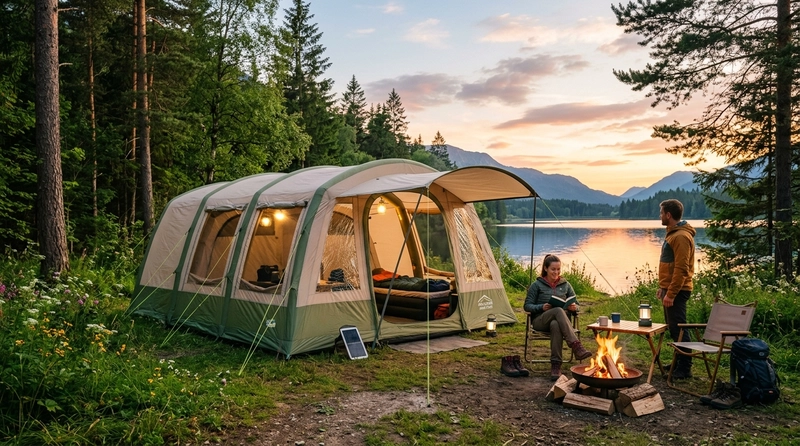
The Air Tent Gazebo for Different Event Sizes
One of the main challenges when selecting an air tent gazebo is sizing it correctly for your specific event. Planning a corporate gathering for a few dozen attendees requires very different equipment than an outdoor festival or a multi-vendor trade show. Many event planners overlook the importance of understanding not just the raw dimensions, but how the tent’s cubic volume affects ventilation and overall comfort.
Air tent gazebos are unique because their structure is maintained by inflated beams rather than rigid metal poles. This benefits setup time and portability but can limit customization in shape and size. If you’re organizing a small product launch or an outdoor meeting, a compact air tent gazebo provides quick shelter with minimal fuss. On the other hand, for larger crowds, you might find your options limited by the maximum size these inflatable structures can maintain securely.
Expect these tents to come with recommended maximum occupancy numbers, and pay close attention to manufacturer specs. Ballooning larger tents not only requires more powerful air pumps but also robust anchoring to withstand wind – something to think about if your venue is exposed to the elements. Deciding on the right size early can save headaches on event day and prevent the issue of guests feeling cramped or having too much open unused space.
Equipping Air Tent Gazebos: Balancing Portability and Functionality
Air tent gazebos are often favored for their quick assembly compared to traditional framed tents. Because the structure inflates, setup time usually clocks in under 15 minutes, even with just one or two people. This advantage makes them a top pick for event planners who work with tight timelines or multiple back-to-back events at different locations.
However, being inflatable doesn’t mean they’re featherlight. Packing down these gazebos after deflation still results in relatively bulky, heavy bags. This has implications for transportation, especially if your team is loading gear into smaller vehicles or carrying equipment across uneven terrain. You need to balance the benefit of quick assembly with the physical effort required to move the gear.
Functionality is another consideration. Some models include customizable walls, zipped doors, or transparent panels, which are great for different event needs but add weight and cost. For purely open-air events, you might simplify your setup and save on packing weight, but this reduces protection against wind or rain. Trade-offs like these highlight why understanding your event conditions before ordering or renting your air tent gazebo can impact not just comfort but logistics.
Weather Handling: Limitations Air Tent Gazebos Face Outdoors
You can’t fully eliminate weather risks when planning outdoor events, but knowing how an air tent gazebo performs in various weather conditions will help you set realistic expectations. These inflatable shelters handle mild wind and light rain well, but they’re not invincible. Because their stability depends on air pressure inside the beams, leaks or punctures become a real concern if debris or rough surfaces are present at the venue.
Strong gusts can stress anchor points and potentially deform the frame if not properly secured. This isn’t always obvious during initial setup but can develop during the event when wind shifts or gust frequency increases. Many event pros recommend supplementary tie-downs or even sandbags for extra security, especially in open spaces like car parks or beaches.
Heavy rain can also be challenging. While the canopy fabrics are usually waterproof, pooling water on the roof can create extra strain on the inflatable beams. Ensuring your air tent gazebo has proper slopes or drainage helps avoid that. If there’s consistent rain forecasted, considering a tent with hard poles might be a safer, though less portable, choice. Weather resilience is a real factor, especially if you’re supplying event equipment across various climates.
| Index | Product Model |
|---|---|
| 6389 | car camping tent |
Branding and Customization: Practical Considerations for Promotional Use
Air tent gazebos frequently act as a focal point for brand visibility at events like trade shows, festivals, or corporate launches. Their large surface areas are ideal for bold logos, messaging, and graphic wraps that enhance brand presence. But customization isn’t always straightforward. Printable panels or covers often require ordering well in advance, sometimes doubling lead times compared to standard tents.
Durability of printed materials also varies. Exposure to sun and rain might fade or damage graphics quicker than expected, particularly if storage and transportation aren’t optimal. The seams where panels connect to the inflated frame can also show wear if frequently installed and broken down. Replacing a custom panel isn’t as simple as swapping a banner; it generally means ordering a whole new cover.
Balancing cost and frequency of use is important when investing in branded air tent gazebos. If you rely on these for many events per year, durable, UV-resistant materials might be worth the upfront expense. For occasional use, sticking with neutral tents and detachable brands signs might be more budget-friendly. The ability to adapt or refresh your branding without replacing the entire structure is a practical aspect that experienced planners keep in mind.
Maintenance and Repairs: What to Expect with Inflatable Structures
Unlike traditional pole tents, air tent gazebos depend on airtight beams to hold their shape, making maintenance a key part of ownership or rental operations. Small punctures can sometimes be patched on the spot with repair kits, and it’s advisable to carry these at all times during events. Flat tires aren’t just a vehicle issue here – losing air means collapse, so redundancy in pumps and backup power sources might be necessary for critical events.
Cleaning can be more complex too. The fabric surfaces generally clean up well, but the inflatable beams require gentle handling to avoid abrasions or tiny holes. Storing the tent dry and away from sharp objects preserves longevity. Regular inspections before and after use catch wear spots or damage before they escalate into failures.
Choosing models with modular beams that can be individually inflated and repaired often reduces downtime. However, that can mean more complex setup and breakdown procedures. Understanding these practical maintenance challenges helps event planners and distributors better advise their clients on feasibility and cost over the equipment’s lifespan. Considering these factors early leads to fewer surprises and smoother event experiences.