
Inflatable Workshop Tent for Your Event
When selecting an inflatable workshop tent, size and layout are often the first considerations. You might picture something spacious enough to accommodate workstations, displays, and traffic flow comfortably. However, it’s critical to weigh these spatial needs against portability and ease of setup. Oversized tents can be cumbersome and may require additional manpower or equipment to inflate and secure, which could complicate logistics.
Material and build quality also matter a great deal. For a workshop setting, tents need to endure repeated assembly and disassembly, sometimes in diverse weather conditions. Some tents come with reinforced seams and heavier-duty fabrics that resist tears and punctures better. But these features might increase shipping weight or cost, which is always a factor on larger projects or in distribution.
The level of ventilation and natural light inside the tent is another practical point. Since workshops often involve equipment, tools, or materials that generate heat or fumes, proper airflow is essential. Many inflatable workshop tents include mesh panels, windows, or adjustable vents to improve air circulation. This might slightly compromise thermal insulation or weather protection, so consider the environment where the tent will be used.
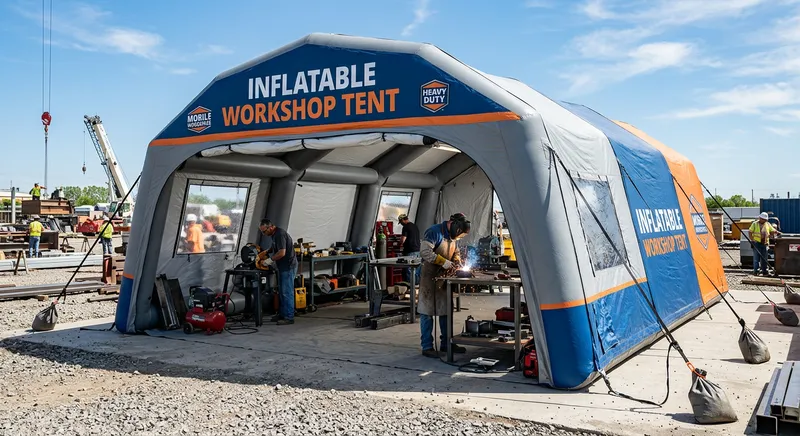
Balancing Portability and Stability in Outdoor Workspaces
Tents that need to be moved frequently or installed in various locations benefit from lightweight design and simple inflation systems. A well-engineered inflatable workshop tent can be pumped up in minutes using portable blowers, which saves time and labor compared to traditional frame tents.
Yet, stability cannot be overlooked, especially if the tent will serve as a long-term or semi-permanent workspace in challenging conditions. Inflatable structures rely on air pressure, making anchor systems and pressure monitoring essential for safety. Users should think about the kind of anchoring available—stakes, weights, or tie-down straps—and how the tent performs in windy environments.
Wind and rain resistance often conflict with the desire for portability. Some models incorporate internal baffles that prevent air redistribution during gusts, improving stability but adding complexity. Distributors and event planners should communicate these trade-offs with their clients, helping them choose between a swift-to-setup tent and one engineered to stand firm over several days outdoors.
Customization Options to Reflect Brand Identity
One of the advantages of inflatable workshop tents is their versatility in branding. Different panel colors, logos, and even structural shapes are possible. Printing directly on the tent or swapping out interchangeable banners can transform a standard inflatable structure into a brand statement at workshops, roadshows, or trade fairs.
Still, not all customization techniques hold up equally over time. UV exposure, abrasion, and mechanical stresses during assembly affect print durability. It’s wise for distributors to discuss maintenance with clients, especially when the tent will be reused multiple times. Some prints may fade, and in some cases, tents might need to be reprinted or have panels replaced to stay visually effective.
The complexity of the tent’s shape also influences the cost and lead time of custom manufacturing. Simple rectangular or dome shapes generally allow for more consistent and cost-efficient designs. Uncommon shapes may require special production molds and longer preparation, which needs to align with project deadlines.
Integrating Functional Features for Workshop Efficiency
Workshops require more than just shelter; often, they need electrical outlets, lighting, or workbench mounts integrated into the tent. Many inflatable workshop tents come with accessory options like built-in cable ports, floor anchoring points, or internal frames to support tools and equipment.
Adding these features means planning early. Retrofit options for tents are limited due to their inflatable nature. For example, attaching heavy hardware without compromising air pressure or fabric integrity requires specially designed fittings. Clients who anticipate needing such utilities should specify these requirements ahead of purchasing.
On-site usability can be affected by flooring choices as well. While some tents are simply anchored to grass or pavement, adding modular flooring can improve comfort and safety inside the workspace. Flooring options vary in weight and installation complexity, which may impact overall setup time and cost.
Maintenance and Storage Considerations
Inflatable workshop tents need ongoing maintenance to stay functional and safe. Frequent inspections for leaks, seam wear, or blower performance are key. Small punctures or slow leaks are common and can often be repaired on-site, but unnoticed damage may lead to sudden deflation during use.
Proper storage conditions also extend the lifespan. Moisture, heat, and UV exposure can degrade materials if the tent isn’t cleaned and dried thoroughly before packing away. Clients who operate in humid climates should be particularly cautious.
From a distributor’s perspective, offering clients clear guidance on maintenance routines and repair kits can reduce unexpected downtime and increase satisfaction. Inflatable tents are durable when cared for correctly, but they’re not invincible—planning for regular upkeep makes all the difference.
Understanding the complexity and daily realities of inflatable workshop tents ensures you recommend solutions that fit actual usage scenarios. Beyond flashy looks, these tents must function reliably to create productive, safe, and branded environments for workshop activities.