
Inflatable Party Tent for Varied Event Sizes
Choosing an inflatable party tent often feels straightforward—just pick a size that fits your guest count. It’s a good starting point, but the reality is more nuanced, especially if events range from small gatherings to large festivals. Inflatable party tents can accommodate different footprints, but you’ll want to consider not only square footage but also factors like ceiling height and access points.
Tents with higher ceilings create a more open atmosphere and can be crucial for staging equipment, lighting, or a dance floor. Low-profile models might save space and pack down smaller but can make larger crowds feel cramped. Another factor is ease of entry and exit. Multiple doorways improve flow and safety, which is critical for corporate or public events.
For ongoing rentals or purchases, think about modular designs. Some inflatable party tents allow you to add or remove sections, offering flexibility for various event sizes without investing in a completely new tent each time. This versatility can lower your overall inventory costs and ensure better space utilization.
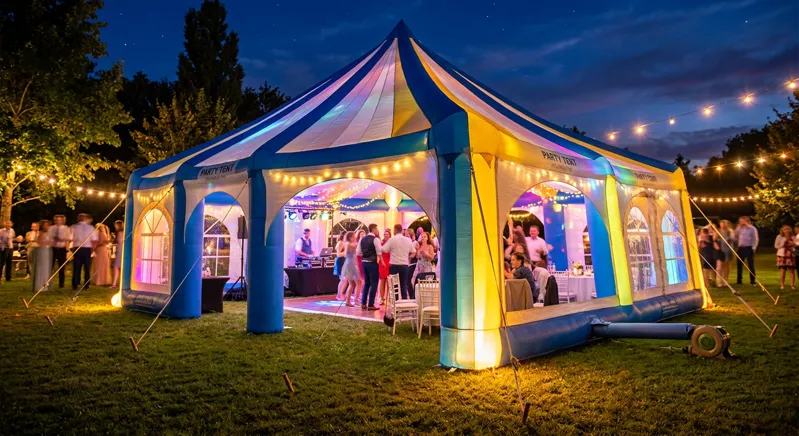
Managing Weather Challenges When Using an Inflatable Party Tent
An inflatable party tent is a decent shelter solution, but weather can be unpredictable, and not all tents cope equally. Most models are water-resistant, but you don’t want assumptions about waterproofing to jeopardize your event or damage your equipment.
Wind is often the biggest concern. Inflatable tents generally have good stability due to their structure, but they still require proper anchoring. It’s essential to confirm with suppliers what tie-downs or weights are recommended for each model and ensure your team follows those specs strictly. Sometimes, inexpensive setups lack reinforcement points, making them vulnerable in gusty conditions.
Providing ventilation can be a balancing act. You want airflow to avoid stuffiness but not so much as to increase vulnerability to wind or rain blowing inside. For some events, removable side panels or mesh sections are a practical addition, allowing you to adjust based on real-time conditions rather than guessing in advance.
Transport and Setup Considerations for Inflatable Party Tents
Transporting an inflatable party tent doesn’t just mean tossing it in a van and heading out. These items can weigh surprisingly much once packed up and may need specialized handling to avoid damage.
Look carefully at how inflatable tents fold down and what kind of case or bag they come in. Some have compact, manageable packages, while others are bulky and require two people or even equipment like dollies. This matters if your team has to load, unload, and set up multiple venues in a day.
Setup time varies by design and experience. Simple models inflate quickly with one pump, but larger tents might demand multiple points inflated simultaneously to maintain the shape and tension. Semi-permanent installations could need more extensive securing, including stakes, sandbags, or attaching to nearby structures.
Make sure your crew is trained on the specifics of the tent model. An improper setup often leads to wrinkles, weak spots, or uneven tension that reduce performance and lifespan. If you’re renting, check if the supplier offers installation guides or on-site support.
Material Durability vs. Weight in Inflatable Party Tent Choices
Choosing between thicker, heavier materials and lighter, more portable ones really depends on your event type and how often you’ll use the tent. Heavy-duty PVC or reinforced vinyl inflatable tents can withstand rough handling, frequent setup, and varying weather, but they tend to weigh more and can be tougher to move.
For distributors or planners who are on the road constantly, carrying multiple tents, lighter fabric blends with durable coatings might make more sense. These won’t last forever, especially with rough use, but they’re easier to transport and quicker to set up.
Keep in mind minor repairs are usually possible on the go with repair kits, which can patch small holes or weak seams. Still, some materials respond better to quick fixes than others. Ask your supplier for recommendations on the toughest and most repair-friendly options if you expect wear and tear.
Custom Branding and Printing Limitations on Inflatable Party Tents
Custom printing is a major draw of inflatable party tents, but it’s worth understanding the constraints. The surface area might seem like a blank canvas, but the inflatable shape and seams often limit where and how designs can be applied effectively.
Printing on seams or folds is tricky: those areas stretch and compress during inflation, distorting images or logos. Most professionals stick to flat panels or areas that remain taut and visible. Also, the resolution and color fidelity can vary based on the fabric and printing technology used.
If your client insists on bold branding or intricate artwork, talk through what will realistically look good once the tent is inflated and in use. Smaller logos placed strategically often fare better than large, detailed scenes. It’s sometimes worth ordering a sample print or prototype to avoid surprises at event day.
Choosing the right color base is equally important. White or light-colored tents act as a better backdrop for vibrant colors but might show dirt more easily. Darker tents hide grime but could reduce visibility of printed graphics.
Maintenance and Storage Practices to Maximize Lifespan
How you treat your inflatable party tent will define how long it stays functional. After every event, it’s vital to clean the tent thoroughly and dry it before packing away. Moisture trapped inside can cause mold or unpleasant odors.
Storage space should be dry, temperature-controlled, and avoid sharp objects or heavy stacking on the packed tent. PVC and vinyl can become brittle if left in cold or exposed to direct sunlight for prolonged periods, which is more common than many expect.
Checking seams and valves regularly can catch small problems before they become big ones. Establish a checklist for your team, covering inflation tests, pressure holds, and surface integrity.
If your usage is frequent, consider a rotational maintenance schedule to inspect and service tents regularly even when not in active use, especially if you lend or rent them out.
These practical concerns often get overlooked but can save you significant replacement costs and downtime down the line.