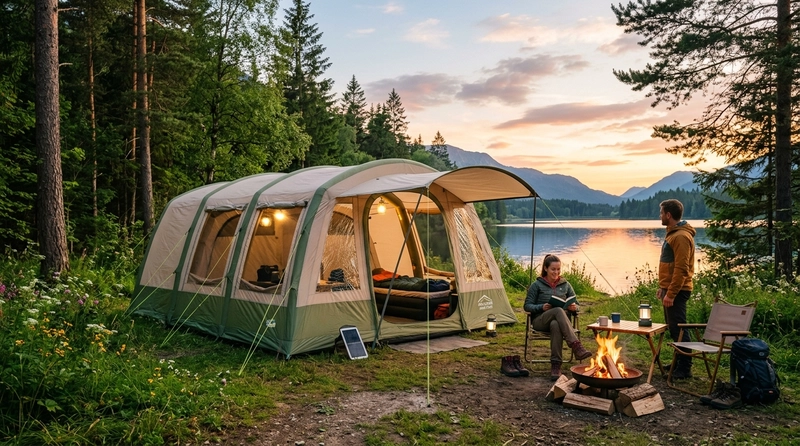
Choosing Between Traditional Poles and Inflatable Camping Tent Frames
One of the first decisions you face when selecting an inflatable camping tent is weighing the advantages against conventional pole-based models. Inflatable tents replace rigid poles with air beams that can be quickly inflated. This allows for faster setup, often within minutes, which is a significant benefit in scenarios where time or manpower is limited.
However, the trade-offs are worth understanding. Inflatable tents tend to be heavier due to the extra material needed for airtight chambers. This can be a limiting factor if your clients prioritize backpack-friendly gear over easy pitching. Additionally, repairs in the field may be trickier; a punctured air beam requires patches or sealant rather than a simple pole replacement. Distributors should keep in mind the importance of supplying repair kits alongside these tents to buyers.
Despite these challenges, inflatable camping tents often provide superior wind resistance because the flexible beams absorb gusts better than rigid poles. This resiliency makes them appealing for events or expeditions where weather conditions are unpredictable. For event planners, their quick setup means fewer staff are needed, cutting labor costs.

Balancing Size, Weight, and Durability for Large-Scale Events
When organizing large corporate outings or multi-day festivals, the scale and durability of the inflatable camping tent become prime considerations. While smaller models are often perfect for individual or family camping, event planners working with groups need tents that support larger capacities and withstand more rigorous use.
Larger inflatable tents may require pumps with higher output or electric assistance, which can complicate logistics. The durability of materials also varies between models; some inflatable tents use thick, high-denier fabrics meant to resist abrasions, while others prioritize lightweight, packable materials. The choice depends heavily on the specific event environment; rugged outdoor festivals will stress durability, whereas private corporate camping weekends might afford lighter options.
Consider also how these tents interact with the need for modularity. Inflatable structures that support interconnecting tunnels or multiple rooms can enhance comfort at events but might introduce more complexity in setup and maintenance.
Managing Maintenance and Repairs on Inflatable Camping Tents
For buyers stocking inventory or planners relying on consistent availability, maintenance is a practical tough spot with inflatable camping tents. Air leaks can emerge over time, especially with frequent use or rough surfaces. Knowing common failure points before purchase helps avoid surprises.
Regular inspections of seams and air valves are crucial, and having clear instruction manuals or videos improves customer satisfaction. Repair patches are generally straightforward but depend on owning the right adhesives or tapes designed for fabric and TPU liners. Event suppliers should guide clients on stocking these materials and handling common issues like slow leaks versus catastrophic punctures.
For distributors, bundling repair accessories and spare parts with the inflatable camping tents you offer can reduce downtime for clients and increase product value. Training staff or clients on proper inflation pressures also extends tent life, as over-inflation strains seams and under-inflation reduces stability.
Choosing the Right Inflation Equipment for Efficient Setup
An often overlooked aspect is the inflation mechanism itself. Manual pumps are common, but labor-intensive for larger tents or multiple setups. Electric pumps speed things up but introduce concerns about power availability and added weight.
Some event planners have found battery-powered pumps strike a good balance, providing mobility without reliance on generators. However, these pumps must have sufficient capacity to handle the tent’s volume without extended run times that drain batteries.
Keep in mind that pumps integrated into the tent design can simplify setup but complicate repairs if they fail. Offering clients several pump options tailored to their event size and environment helps meet diverse needs and avoids accessibility issues on-site.
Weather Considerations: How Inflatable Tents Stand Up to Rain and Wind
The weather is an unforgiving variable for inflatable camping tents, especially for outdoor event buyers. Air beams flex in high winds, which can be an advantage, but excessive movement or deflation risks sudden collapses.
Rainwater management depends greatly on fabric coatings and tent design. Inflatable models often feature integrated gutters or flysheets to direct runoff, but pooling water can stress air beams if not properly drained. Event planners in rainy climates should verify these features before committing to a bulk purchase.
Given these factors, it is wise to test tents in simulated weather conditions or check user feedback from similar environments. Offering clients guidance on anchoring systems and extra guy lines is also valuable; inflatable tents often need precise staking to balance air pressure and stability.
Planning for extreme weather with backups or rapid deflation protocols keeps events running smoothly without compromising attendee safety.
Balancing all these practicalities is key to making informed decisions about inflatable camping tents. Understanding the nuances of structure, setup, maintenance, and weather resilience helps professional buyers and event planners pick the right gear, ensuring dependable performance when it counts.