
Air Tent with Rooms for Multi-Day Events
When planning events that span multiple days, one of the biggest questions is how to provide comfortable and functional accommodations without relying solely on traditional tents or accommodations. An air tent with rooms offers a clear advantage here, giving event planners and distributors a versatile structure that can be subdivided into private or communal areas. But this flexibility comes with its own set of considerations.
The first hurdle is deciding how many rooms you genuinely need. Over-dividing a tent might feel like adding privacy, but it risks reducing usable space and ventilation, making it cramped. Conversely, opting for too few rooms can leave guests dissatisfied, especially if the event demands quiet or secure areas for sleeping or equipment storage. Air tents with modular room dividers help strike a balance, but layouts must consider access points and potential bottlenecks. Door placement, room size, and ceiling height all affect the overall experience.
Another factor is setup complexity. Adding internal partitions inevitably lengthens setup time, which can impact labor costs and event timelines. Fortunately, air tents tend to be quicker to erect than conventional frame tents. Still, incorporating rooms means additional attachments, zippers, or Velcro fastenings and the need for dependable sealing between sections to maintain privacy and climate control. Testing these elements in advance can save headaches on-site.
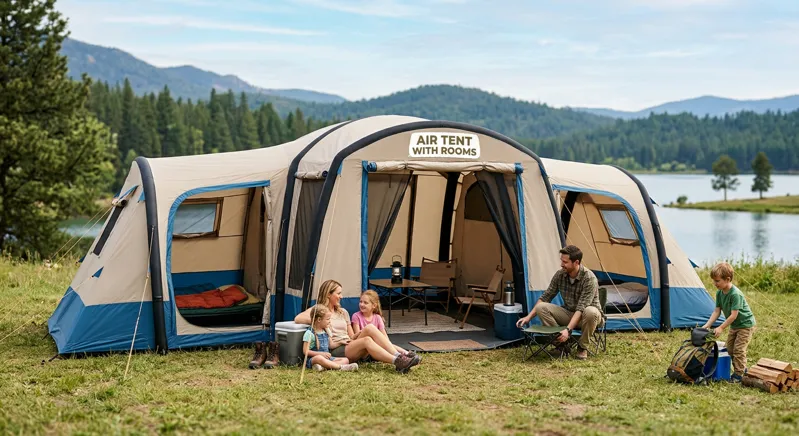
Balancing Ventilation and Privacy in Multi-Room Air Tents
Privacy is a major reason clients lean toward an air tent with rooms. Yet, privacy and ventilation can conflict, especially in hot or humid environments. Dividing a single large space into multiple smaller rooms can hinder airflow, causing stuffiness or uneven temperatures. An often overlooked aspect is the placement of ventilation windows, vents, and air circulation paths. Without proper airflow, condensation and discomfort become serious issues.
Some air tents come with built-in mesh panels or adjustable vents in each room, allowing partial airflow while preserving privacy. However, mesh windows may not always offer sufficient noise control or block light effectively, which could impact sleep quality during multi-day events. On the flip side, fully sealing rooms to block sound and light can trap heat and odors.
When selecting an air tent with rooms, consider the typical climate and how much ventilation adjustments will be required. Adding portable fans or dehumidifiers inside larger or more enclosed rooms can help, but this adds to your equipment load. The best approach often involves a combination of design features and the event team’s ongoing management of internal climates.
Logistics of Transport and Storage for Air Tents with Rooms
Air tents, especially those with integrated room setups, need more careful handling when it comes to transport and storage. While they are generally lighter and more compact compared to pole or frame tents, the added room dividers and accessories increase packing complexity.
Disassembling an air tent with rooms requires not just deflating the main structure but also carefully folding or rolling internal partitions and securing any attachment points to prevent damage or tangling. This process demands extra time and trained personnel who understand the materials well.
When loading for transport, the tent’s total packed weight and volume may exceed initial estimates if extra accessories like floor mats, room dividers, or zippers are included. This directly affects transportation costs and vehicle selection. Storing these tents in a climate-controlled environment is advisable to prevent mold, mildew, and fading, particularly due to the synthetic materials often used for room partitions.
Planning storage space early and marking each tent’s packing configuration can streamline setup for recurring events. Some suppliers offer color-coded components or storage bags to keep room dividers and accessories organized, reducing wear and tear. These small steps improve turnaround time and extend the tent’s service life.
| Number | Product Model |
|---|---|
| 3192 | Air Tent with Rooms |
How Durability and Maintenance Vary with Room Features
Adding rooms changes the maintenance profile of an air tent. The more seams, zippers, and velcro closures included, the more potential failure points exist. For instance, zippers can jam or break, and velcro can lose adhesion if exposed to dirt or moisture for long periods.
Synthetic room dividers may also be thinner and less durable than the tent’s main fabric, making them prone to tears or stains during loading, unloading, or repeated use. This doesn’t necessarily mean they’re unsuitable, but it does hint at a need for regular inspection and potential replacement of components more often than the main tent body.
Keeping equipment in good condition requires having spare parts ready, especially if the tent will be rented out frequently or used in rugged settings. Cleaning rooms after each event can be tricky because dirt and dust often settle in seams and on velcro areas. Using gentle cleaning agents and avoiding harsh chemicals prolongs fabric life.
When evaluating different air tents with rooms, ask about repair kits and warranty details for internal partitions. Some suppliers offer modular replacement panels, making it easier to swap out damaged sections without taking the entire tent offline. This practical consideration is especially useful for event distributors juggling multiple clients and locations.
Adapting Air Tents with Rooms for Various Event Types
Air tents with rooms are often chosen because they’re easy to customize for a wide range of uses beyond simple accommodation. For exhibitions, product launches, or VIP areas at outdoor festivals, the option to section off areas inside a single enclosed structure can enhance flow and functionality.
Some event planners use rooms as breakout spaces or private meeting rooms within a larger expo tent, eliminating the need to rent multiple temporary structures. Others partition zones for storage, catering, or first aid, offering separation that helps streamline operations.
However, this flexibility requires careful upfront planning. Sound travels differently depending on the number and size of rooms and the materials used. It’s not uncommon to find that internal partitions do little to block noise if they’re made of thin fabric or mesh panels.
Lighting also becomes more complicated. Rooms without windows mean you need additional lighting sources, wiring, and power management. Running cables in an air tent demands careful routing to prevent damage to the structure or safety risks.
When rented for different events, air tents with rooms must consider how easy it is to reconfigure internal layouts quickly. Modular designs with removable or adjustable partitions work best, but more rigid room setups might slow down changeover times. Matching a tent’s room design to the event’s specific workflow needs will improve satisfaction for planners and participants alike.
Practical Tips for Managing Setup and Use on Event Day
Even with a sturdy air tent with rooms, on-the-day setup and management can make or break the event experience. Arriving early with all necessary equipment—including pumps, tools, repair kits, and extra stakes—ensures that potential issues won’t cause delays.
Assigning team members specific roles is helpful, especially managing internal partitions and ensuring each room is properly secured and sealed. Mistakes here, like leaving zippers open or misaligned Velcro, can affect privacy and climate control.
Knowing the tent’s airflow patterns on site is crucial. Opening vents at the right times to prevent condensation without sacrificing comfort takes some trial and error, particularly in varied weather conditions.
Equipment monitoring should continue throughout the event. Checking for leaks, shifts in pressure, or damaged fabric can help spot small problems before they become noticeable to guests or compromise safety.
Having a well-documented setup checklist, including room configurations and emergency procedures, supports consistent quality across multiple events. The best suppliers provide these resources, which reflect real-world experience rather than generic instructions.
In this way, managing an air tent with rooms becomes a streamlined process, keeping guests comfortable and planners relaxed.